
One of George Orwell’s most famous works, Animal Farm, was published in 1945. The book is a sharp criticism of political systems and reflects the ideological struggles of its time.
The story begins with telling you about Mr. Jones, the owner of Manor Farm. He forces the animals to work hard while giving them very little food. One night, a pig named Old Major gathers the animals and tells them about their suffering. He explains that the true cause of their misery is Mr. Jones – in fact, all of humankind. He also shares a dream with them: a future where all animals are free.
“Years ago, when I was just a little piglet, my mother and the other pigs used to sing a song called ‘Beasts of England.’ Now I will teach you its tune, and once you learn it, you will be able to sing it even better,” he says.
The animals sing it loud and passionately. Mr. Jones, drunk that night, hears the noise and fires his gun several times.
A few minutes later, the farm goes silent again.
A few days later, Old Major dies. However, his words remain in the minds of the animals. The pigs, believed to be the most intelligent, take the lead — especially Snowball and Napoleon.
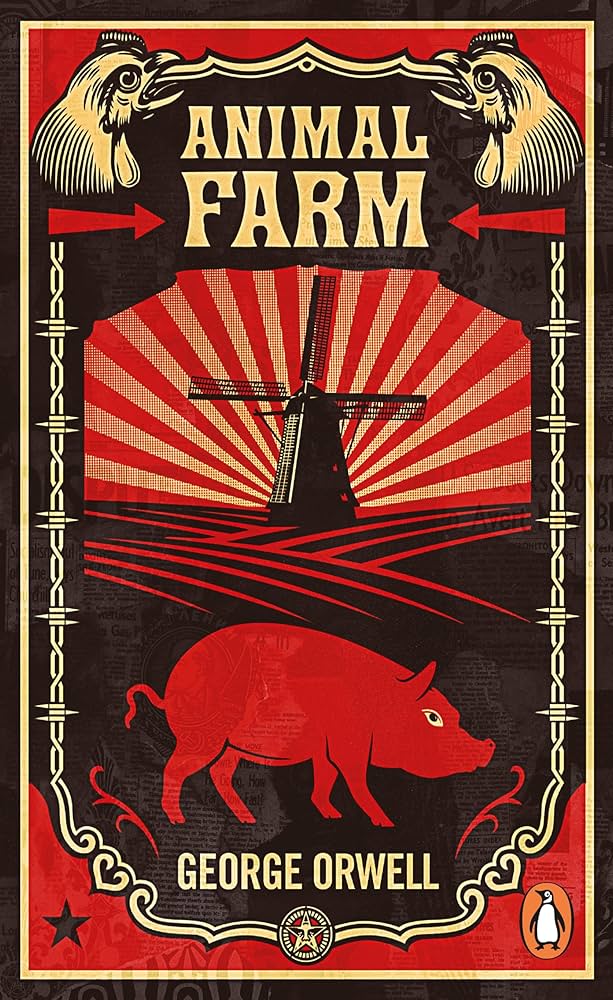
When Mr. Jones once again leaves the animals hungry and even beats some of them, the animals can no longer handle. They rise up in a rebellion and drive him away. After this victory, they establish seven commandments to guide their new society:
- Four legs and wings are good, two legs are bad.
- No animal shall kill another animal.
- No animal shall sleep in a bed.
- No animal shall live in a house.
- No animal shall touch money.
- No animal shall drink alcohol.
- All animals are equal.
The commandments are written on the barn wall so that every animal can see them. The sheep memorize them, the dogs recite them, and the farm begins to run with a new sense of hope. The pigs, however, do not work in the fields; instead, they manage and make decisions.
Every Sunday they raise their flag and hold meetings with all the animals. Snowball proposes building a windmill to provide electricity. Most animals support the idea, but Napoleon does not. Deep inside, there is a struggle between the two leaders; both of them want to rule the farm alone and try to undermine each other. Meanwhile, the other farmers and Mr. Jones, after their bad luck, are making plans to take the farm back. One evening they attack. Chaos breaks out on the farm: Boxer kicks Mr. Jones with his hooves, Snowball bites him. Somehow the animals manage to win this bloody battle.
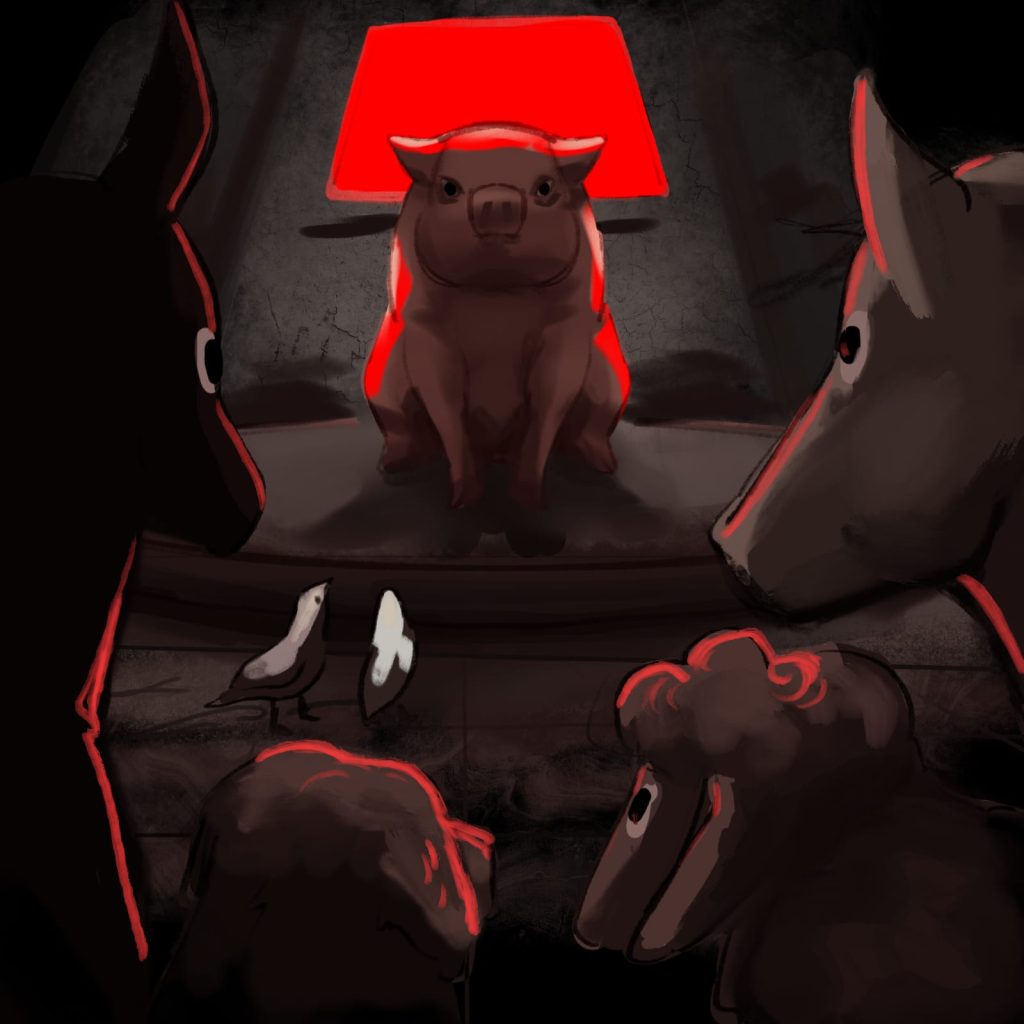
The next day, Napoleon calls Snowball a traitor and then presents the windmill idea as his own. From this moment on, Napoleon controls the farm with fear and propaganda. When the windmill is later destroyed, the pigs blame Snowball again. The animals rebuild it, working even harder than before.
They sell the hens’ eggs. The loyal horse Boxer breaks his leg and the pigs promise he will be treated, but in fact, they sell him to the slaughterhouse.
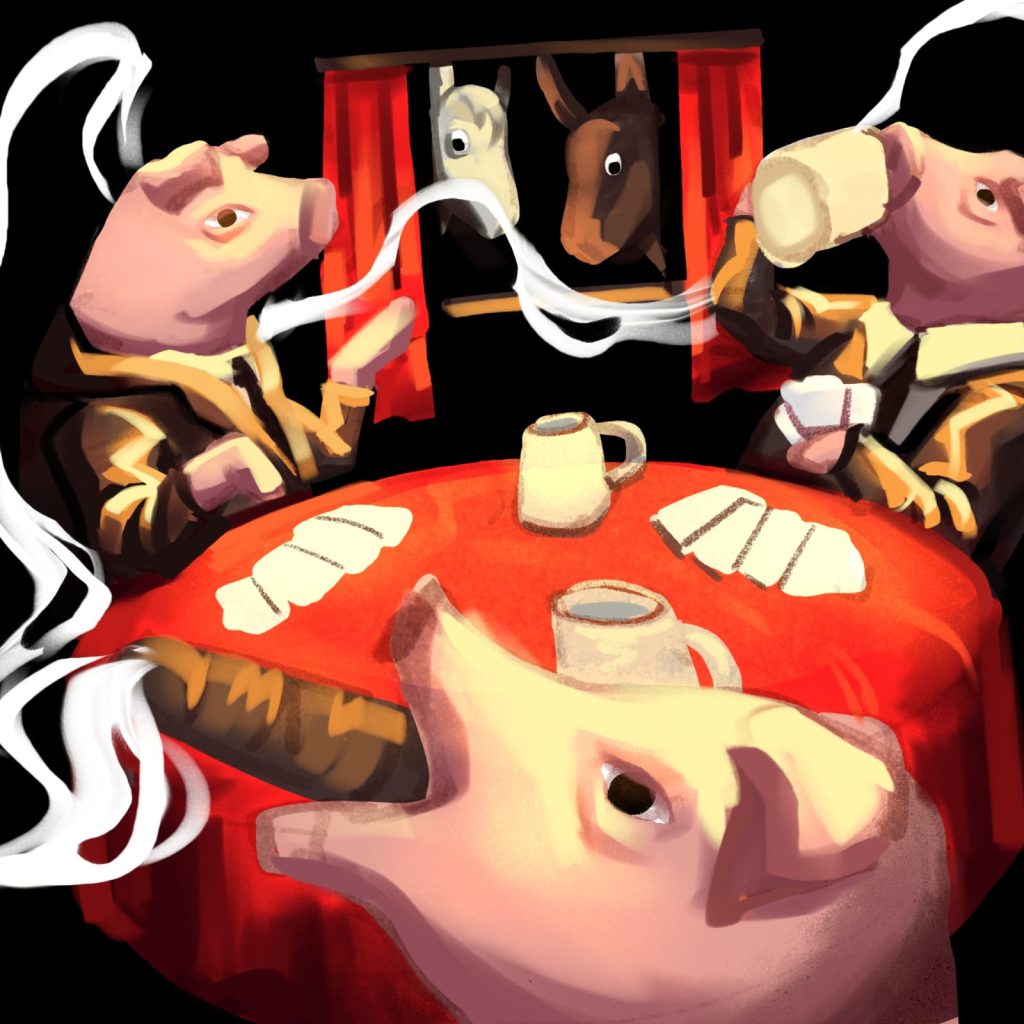
Soon after, the animals hear laughter coming from the farmhouse. Looking through the window, they see pigs sitting at the table with humans. At that moment, the animals realize they can no longer tell the difference between pigs and men.
At first, Animal Farm was clearly seen as a reflection of Soviet Russia, but it speaks to the corruption of power in any system. The allegory is obvious:
- Mr. Jones = Tsar Nicholas II
- Old Major = Karl Marx
- Snowball = Lenin or Trotsky
- Napoleon = Stalin
The promise of equality turns into a dystopia. The pigs may seem guilty, but the other animals are as responsible. Like a frog slowly boiling in water, they fail to see the danger until it is too late.
The sheep represent blind followers, repeating slogans without thought.
Boxer represents the working class, loyal but unquestioning.
The hens represent the middle class; they notice what’s happening but soon forget.
The pig Squealer becomes the voice of propaganda, manipulating facts to defend Napoleon.
The pigs, on the other hand, kept bringing more pigs into power. At first there were only a few, but over time the leadership grew to thirty or forty pigs.
The humans tried to win over the powerful pigs and actually succeeded. They even sat at the same table.
In this story, the humans are the West, they represent fascism and also imperialist powers. The book criticizes this as well. Like a snake, the humans quietly used the pigs’ selfish sides. By the end of the book Napoleon even changes the farm’s name. Manor Farm has returned – only the pig at the top has changed…
By the end, the dream of freedom has collapsed. The animals, who once fought for equality, find themselves under a new dictatorship – different in name, but the same in nature.


Bir yanıt yazın